
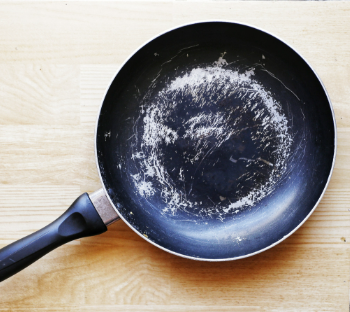
It’s almost ridiculous: you buy a pan to cook with, and the act of cooking is what damages it. One metal tong, one firm spatula, one aggressive stir—and there it is: scratches.
Scratches aren’t cosmetic—they’re the beginning of the end
With non-stick and ceramic pans, scratches aren’t just surface-level. They’re a sign that:
-
the protective layer has been compromised
-
the pan will start sticking sooner
-
cleaning becomes harder
-
performance drops (often faster than you expect)
And from there, you fall into the most annoying spiral:
more sticking → more scrubbing → more damage → even more sticking.
“But I only use wooden utensils…”
Even then: salt crystals, grit, overheating, dishwasher wear, stacking in a cupboard—micro-damage happens. And once the surface starts failing, it shows.
Titanium: made to be used for real
Pure titanium isn’t afraid of everyday utensils. No “special rules.” No pan you have to treat like it’s fragile. The surface is:
-
tough and wear-resistant
-
scratch-resistant
-
not dependent on a coating to perform
So you don’t cook with caution. You just cook.
The relief nobody sells
A pan you don’t have to protect is its own kind of luxury. No “don’t stack,” “silicone only,” “don’t go too hot,” “don’t soak too long.”
Just: heat it, cook, rinse, done.

Leave a comment
This site is protected by hCaptcha and the hCaptcha Privacy Policy and Terms of Service apply.